Fabrication companies build to order. Every truck body, steel structure, panel or machine part is a little different, which is exactly why so many workshops still run on paper job cards, whiteboards and spreadsheets. Generic software built for mass production rarely fits.
Yet fabrication is where digital transformation pays off quickly. This guide explains what changes when a fabrication business goes digital, where to start, and what we learned digitizing a 40-year-old UAE manufacturer. If you are new to the topic, start with our guide What is digital transformation?
Why fabrication is different
A fabrication workshop is a series of small projects running at the same time. Each job has its own drawings, materials, stages and deadline, and moves between several workshops before it is delivered. That creates problems mass-production software was never designed to solve:
- Every quote is custom. Estimating materials and labour for each job takes experienced people hours, and the numbers are rarely compared with what the job really cost.
- Jobs move between workshops. Cutting, welding, assembly, painting, electrical and finishing are often separate teams, sometimes in separate buildings. Nobody sees where a job is without walking the floor.
- Materials are expensive and varied. Steel, aluminium, panels, insulation and components are bought for specific jobs and shared across others, so stock levels are hard to trust.
- Labour is the biggest cost. Attendance, overtime and time spent per job sit in separate records, so job profitability is a guess.
- Customers want updates. Clients call to ask when their order will be ready, and the answer depends on whoever they reach.
The pressure to modernize
Manufacturers that digitize report measurable gains. Deloitte’s research with the Manufacturers Alliance found that early smart factory adopters improved factory output, capacity utilization and labour productivity by about 10% on average over three years. The World Economic Forum’s Global Lighthouse Network, which recognizes the most advanced factories in the world, reported that its 2025 sites improved labour productivity by 40% on average and cut lead times by 48%.
You don’t need robots or a “lighthouse” factory to benefit. Most of the early gains in fabrication come from something far simpler: knowing, in one system, what every job needs, where it is and what it cost.
In the UAE there is also national momentum. Operation 300bn, the UAE Industrial Strategy run by the Ministry of Industry and Advanced Technology, aims to raise the industrial sector’s contribution to GDP from AED 133 billion to AED 300 billion by 2031, with programmes to support more than 13,500 SMEs and a strong focus on advanced technology.
What to digitize in a fabrication business
1. Quoting and estimating
Turn your estimating knowledge into templates: standard materials, labour hours per stage and margins for each product type. Quotes become faster and consistent, and every accepted quote becomes a job automatically, with no retyping.
2. Job and work order management
Each job gets one digital record: customer, specifications, drawings, bill of materials, deadlines and notes. Workshops see the jobs assigned to them, and changes reach everyone at once instead of living on a printed job card.
3. Stage tracking across workshops
Define the stages your jobs pass through, for example cutting, welding, assembly, painting, electrical and quality check, and let each team mark a job in or out of its stage from a tablet or phone. Managers get a live board of every job and its stage, and bottlenecks become visible.
4. Inventory and purchasing
Track raw materials and components across every store and warehouse in one system. Reserve stock for specific jobs, see what needs reordering, and stop buying materials you already have in another branch.
5. HR, attendance and job costing
Connect attendance and shift records with the jobs people work on. You see real labour hours per job next to the estimate, so you know which products, customers and workshops make money.
6. Customer and after-sales records
Keep every customer, vehicle or asset, warranty and service history in one place. Repeat orders, service bookings and rentals start from known data instead of a phone call and a search through old files.
7. Automation and AI
Once the data is connected, repetitive work can run automatically: allocating charges to customers, generating invoices from completed jobs, and producing management reports. AI can then read documents and supplier invoices, flag delayed jobs, and help forecast demand for materials and labour.
A UAE example: Refrigerated Transport Systems
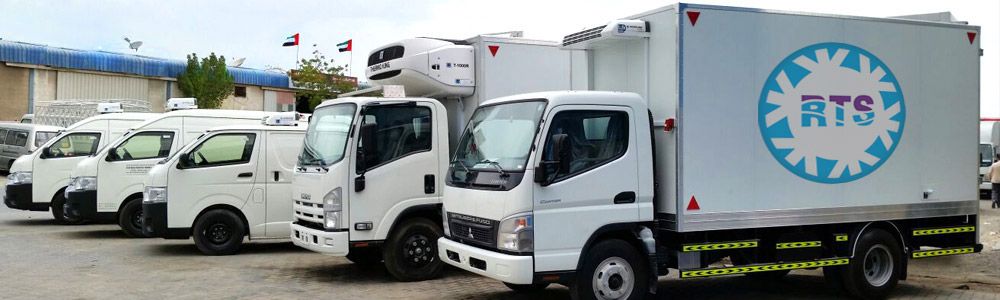
Refrigerated Transport Systems (RTS) has built refrigerated truck bodies in the UAE for 40 years, and also runs a refrigerated vehicle rental business. Its production runs through several workshops: insulated box building, painting, electrical, and automotive engineering. For most of its history, the company’s data lived in documents and Excel files spread across branches.
We have worked with RTS for more than two years, one department at a time and with the agreement of each team before changes went live:
- One email domain for every user, replacing a mix of personal and old accounts.
- HR and factory attendance for every factory and branch in one system.
- One central database for all branches, businesses and customers.
- A rental booking system for the refrigerated vehicle fleet.
- Automated Salik toll and traffic fine allocation: the team uploads the raw data and each charge is assigned to the right customer and vehicle. Two weeks of manual work every month now takes one day.
- Centralized inventory across warehouses.
- One production line (in progress) that brings box building, painting, electrical and automotive work together, so every order’s exact stage is visible.
The next step is AI, which will use the connected data to process documents and information even faster. Read the full RTS case study.
A step-by-step roadmap
- Map how work really flows. Follow a few real jobs from quote to delivery and note every hand-off, form and spreadsheet.
- Pick the most painful process first. Often this is stage tracking, inventory or a monthly reconciliation that takes days.
- Build one central database early. Every module you add later, such as quotes, jobs, stock and HR, should share the same customer, product and job records.
- Digitize one department at a time. Give each team working software quickly, import their existing Excel data, and train them before moving on.
- Involve the people on the shop floor. Supervisors and workshop leads know where the delays are. Systems they help design are systems they use.
- Measure the results. Track quote turnaround, on-time delivery, stock accuracy and hours per job before and after each phase.
- Add automation and AI last. They deliver the most once your data is complete and trusted.
Common mistakes to avoid
- Buying a system built for mass production and forcing job-based work into it.
- Trying to change everything at once. Big-bang projects overwhelm teams and stall.
- Leaving the shop floor out. If updating a job takes longer than shouting across the workshop, nobody will do it.
- Keeping old spreadsheets running in parallel for months, so nobody trusts either version.
- Starting with AI before the underlying data is digital and connected.
How we can help
Shubbak Technologies helps fabrication companies, manufacturers and traders in the UAE plan and deliver digital transformation, from consulting and roadmaps to custom systems for quoting, jobs, production, inventory and HR, connected through one database and ready for AI. We are partners of Microsoft, Amazon Web Services and Zoho, and build custom software where off-the-shelf tools don’t fit how a workshop runs. Learn more about our digital transformation services, or book a free consultation.
References
- Deloitte and the Manufacturers Alliance (MAPI), 2019 Deloitte and MAPI Smart Factory Study.
- World Economic Forum, Global Lighthouse Network 2025 (September 2025).
- UAE Ministry of Industry and Advanced Technology, The UAE Industrial Strategy (Operation 300bn).
- UAE Government portal, The UAE Industrial Strategy.